In today’s digital workplace, knowing where to find information can be almost as important as having access to it. As the way we work evolves, information needs to be easy to find, understand, and access when needed. This is particularly relevant when talking about People experience, where finding answers often requires navigating multiple systems, portals, FAQs, and documents.
MyCelfocus Assistant was created to make this experience faster, simpler, and more intuitive. As part of Celfocus’ AI-First strategy, it uses AI to enable a more natural way of accessing People-related information. Through conversation, users can find answers from approved internal sources without needing to know where the information is stored.
More than a technology initiative, MyCelfocus Assistant reflects a business-led approach to AI. The People team started with a real challenge faced by our people and turned it into an opportunity to rethink access to information. From there, the team designed and delivered an AI-powered experience focused on simplicity, accessibility, and trust.
For our people, finding the right information across areas such as training, career growth, benefits, travel and expenses, payroll, talent programmes, and leave management could take time and effort. Although the information was available, getting the right answer quickly and easily was not always straightforward.
This led the People team to explore how AI could make approved information easier to access through a single, intuitive interaction, without compromising governance, security, approval processes, or organisational policies. That challenge became the starting point for MyCelfocus Assistant.
MyCelfocus Assistant is differentiated not only by its technology, but also by how it was conceived and delivered. The initiative was led by the People team rather than developed as a typical software delivery project.
The team identified the opportunity, shaped the vision, and prioritised business needs. It designed the user experience, structured the knowledge domains, validated the content, and led the initiative from concept to rollout.
The project demonstrates how business experts can lead the development of AI-powered solutions when supported by cross-functional collaboration, appropriate governance, and technology. Along the way, the team developed new capabilities in AI, prompt engineering, knowledge management, testing, governance, and change management. This helped transform a People challenge into a business-led innovation initiative.
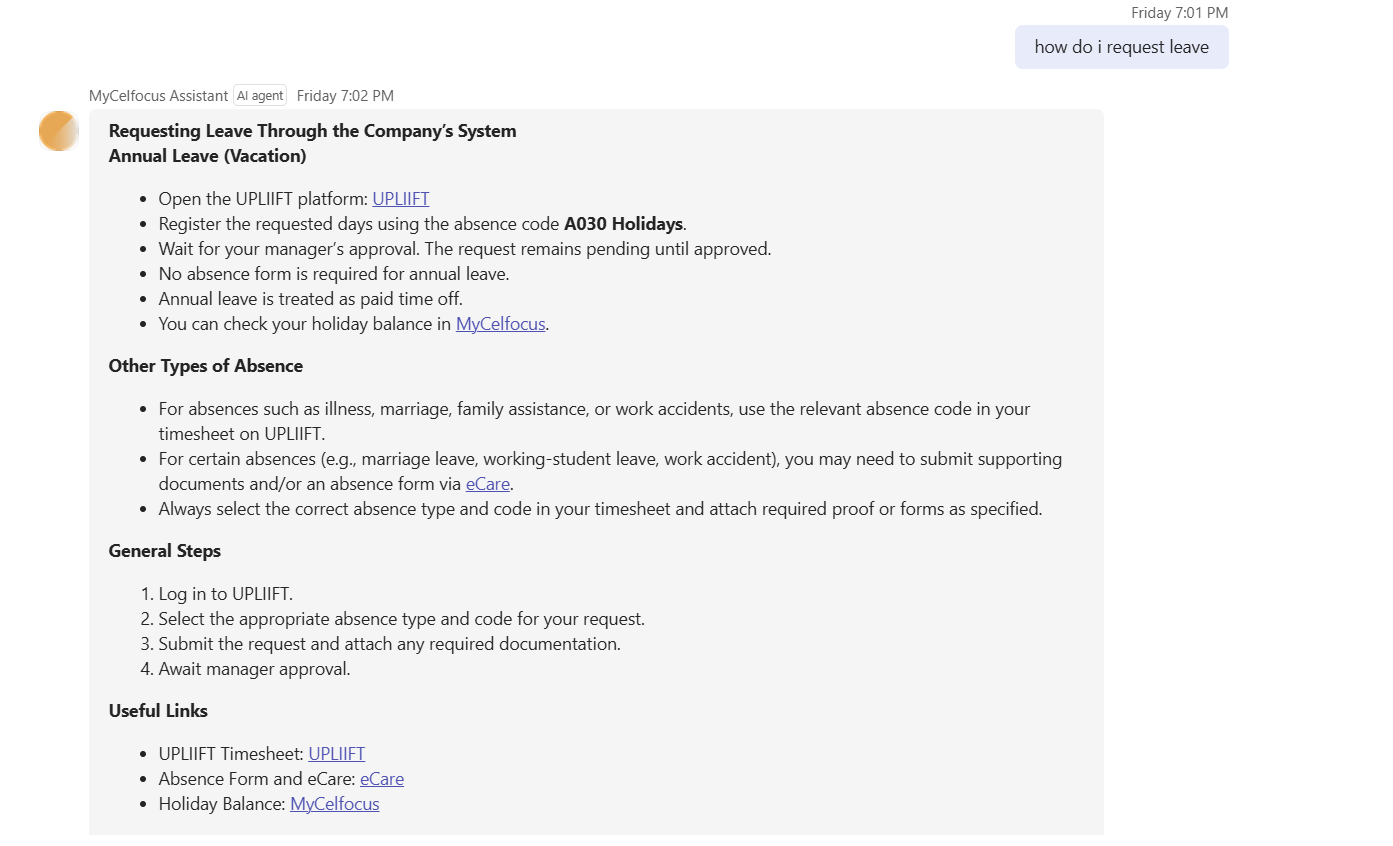
The development of the assistant began with an assessment of our people’s needs and a detailed mapping of the existing knowledge landscape. The initial knowledge domains were Training, Career Growth, Benefits, Payroll, Travel, Fleet, Administrative Processes & Tools, and Talent Programmes.
The team consolidated, reviewed, and validated the relevant knowledge sources. Subject matter experts from different functions collaborated to ensure that the assistant’s responses were based on accurate and approved information. This foundation was critical: an AI assistant is only as reliable as the knowledge and governance behind it.
Although the initiative was led by the People team, its success depended on close collaboration across the organisation. Teams from IT, Information Security, Application Security, and Legal contributed throughout the project, alongside business stakeholders, managers, and pilot participants.
Bringing together different areas of expertise helped ensure that the assistant addressed real business needs while remaining aligned with organisational standards, governance requirements, and security expectations.
Technology enables change, but successful adoption also depends on trust. The rollout strategy therefore focused on building people’s confidence as well as ensuring effective technical delivery. The first phase consisted of a controlled pilot with selected participants. This allowed the team to validate the assistant in a real working environment before gradually expanding access.
Communication played a central role throughout the rollout. Clear explanations, practical guidance, awareness initiatives, and structured feedback channels helped our people understand the assistant’s value, purpose, and intended role.
Ultimately, adoption depends on both technological capabilities and people’s confidence in using AI. MyCelfocus Assistant aims to reduce the time spent searching across multiple sources, allowing our people to dedicate more attention to their core activities.
MyCelfocus Assistant is more than a People-focused AI assistant. It demonstrates how business expertise, responsible AI, and cross-functional collaboration can address real challenges and improve the people experience, while reinforcing a core principle of Celfocus’ AI-First strategy: technology alone does not define successful AI initiatives. It is the people who understand business challenges, embrace innovation, and work together to turn ideas into practical solutions
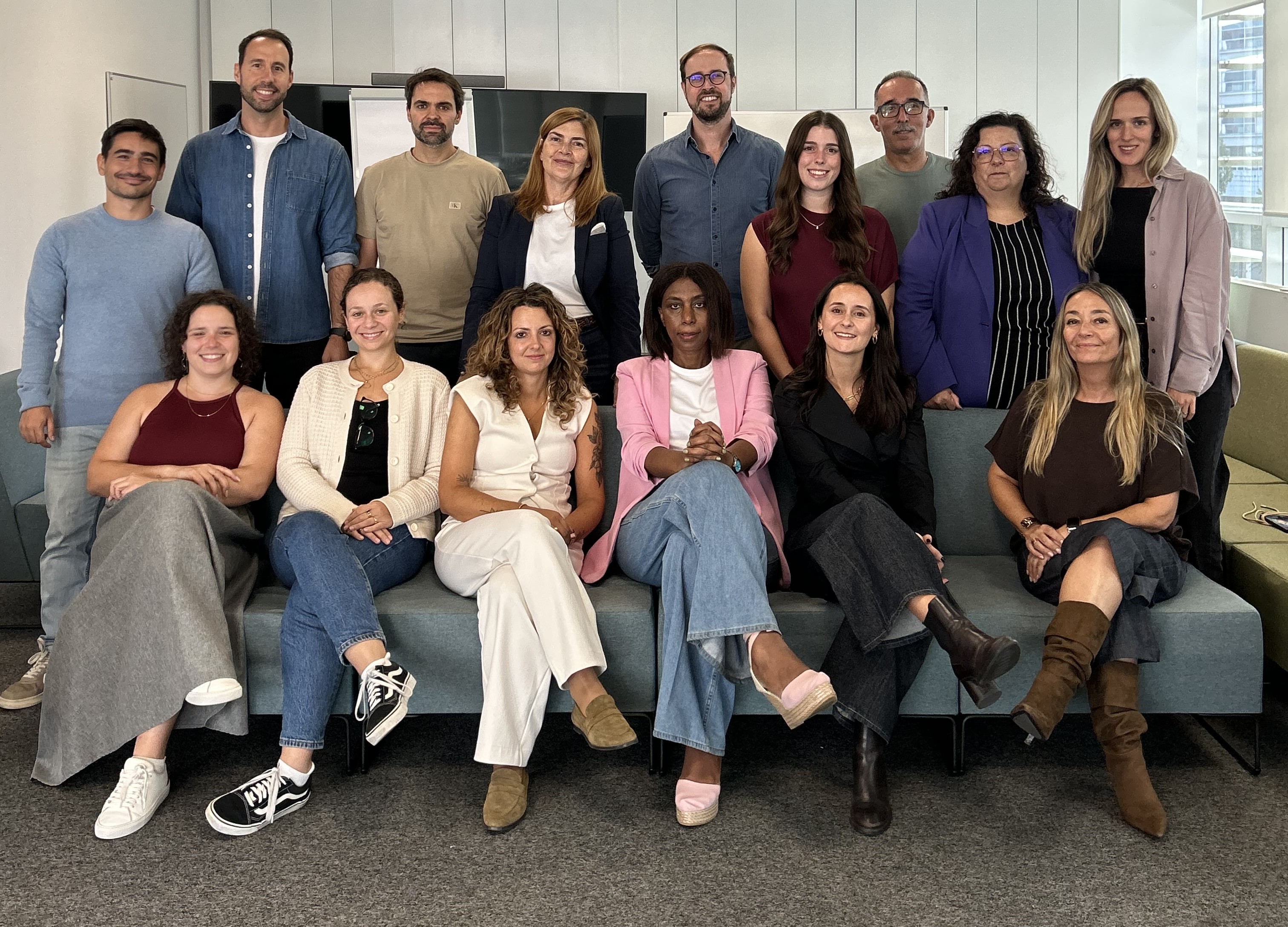
This article is brought to you by Esmeralda Monteiro, Celfocus Training Manager.
In today’s digital workplace, knowing where to find information can be almost as important as having access to it. As the way we work evolves, information needs to be easy to find, understand, and access when needed. This is particularly relevant when talking about People experience, where finding answers often requires navigating multiple systems, portals, FAQs, and documents.
MyCelfocus Assistant was created to make this experience faster, simpler, and more intuitive. As part of Celfocus’ AI-First strategy, it uses AI to enable a more natural way of accessing People-related information. Through conversation, users can find answers from approved internal sources without needing to know where the information is stored.
More than a technology initiative, MyCelfocus Assistant reflects a business-led approach to AI. The People team started with a real challenge faced by our people and turned it into an opportunity to rethink access to information. From there, the team designed and delivered an AI-powered experience focused on simplicity, accessibility, and trust.
Although the initiative was led by the People team, its success depended on close collaboration across the organisation. Teams from IT, Information Security, Application Security, and Legal contributed throughout the project, alongside business stakeholders, managers, and pilot participants.
Bringing together different areas of expertise helped ensure that the assistant addressed real business needs while remaining aligned with organisational standards, governance requirements, and security expectations.
In today’s digital workplace, knowing where to find information can be almost as important as having access to it. As the way we work evolves, information needs to be easy to find, understand, and access when needed. This is particularly relevant when talking about People experience, where finding answers often requires navigating multiple systems, portals, FAQs, and documents.
MyCelfocus Assistant was created to make this experience faster, simpler, and more intuitive. As part of Celfocus’ AI-First strategy, it uses AI to enable a more natural way of accessing People-related information. Through conversation, users can find answers from approved internal sources without needing to know where the information is stored.
More than a technology initiative, MyCelfocus Assistant reflects a business-led approach to AI. The People team started with a real challenge faced by our people and turned it into an opportunity to rethink access to information. From there, the team designed and delivered an AI-powered experience focused on simplicity, accessibility, and trust.
For our people, finding the right information across areas such as training, career growth, benefits, travel and expenses, payroll, talent programmes, and leave management could take time and effort. Although the information was available, getting the right answer quickly and easily was not always straightforward.
This led the People team to explore how AI could make approved information easier to access through a single, intuitive interaction, without compromising governance, security, approval processes, or organisational policies. That challenge became the starting point for MyCelfocus Assistant.
MyCelfocus Assistant is differentiated not only by its technology, but also by how it was conceived and delivered. The initiative was led by the People team rather than developed as a typical software delivery project.
The team identified the opportunity, shaped the vision, and prioritised business needs. It designed the user experience, structured the knowledge domains, validated the content, and led the initiative from concept to rollout.
The project demonstrates how business experts can lead the development of AI-powered solutions when supported by cross-functional collaboration, appropriate governance, and technology. Along the way, the team developed new capabilities in AI, prompt engineering, knowledge management, testing, governance, and change management. This helped transform a People challenge into a business-led innovation initiative.

The development of the assistant began with an assessment of our people’s needs and a detailed mapping of the existing knowledge landscape. The initial knowledge domains were Training, Career Growth, Benefits, Payroll, Travel, Fleet, Administrative Processes & Tools, and Talent Programmes.
The team consolidated, reviewed, and validated the relevant knowledge sources. Subject matter experts from different functions collaborated to ensure that the assistant’s responses were based on accurate and approved information. This foundation was critical: an AI assistant is only as reliable as the knowledge and governance behind it.
Although the initiative was led by the People team, its success depended on close collaboration across the organisation. Teams from IT, Information Security, Application Security, and Legal contributed throughout the project, alongside business stakeholders, managers, and pilot participants.
Bringing together different areas of expertise helped ensure that the assistant addressed real business needs while remaining aligned with organisational standards, governance requirements, and security expectations.
Technology enables change, but successful adoption also depends on trust. The rollout strategy therefore focused on building people’s confidence as well as ensuring effective technical delivery. The first phase consisted of a controlled pilot with selected participants. This allowed the team to validate the assistant in a real working environment before gradually expanding access.
Communication played a central role throughout the rollout. Clear explanations, practical guidance, awareness initiatives, and structured feedback channels helped our people understand the assistant’s value, purpose, and intended role.
Ultimately, adoption depends on both technological capabilities and people’s confidence in using AI. MyCelfocus Assistant aims to reduce the time spent searching across multiple sources, allowing our people to dedicate more attention to their core activities.
MyCelfocus Assistant is more than a People-focused AI assistant. It demonstrates how business expertise, responsible AI, and cross-functional collaboration can address real challenges and improve the people experience, while reinforcing a core principle of Celfocus’ AI-First strategy: technology alone does not define successful AI initiatives. It is the people who understand business challenges, embrace innovation, and work together to turn ideas into practical solutions

This article is brought to you by Esmeralda Monteiro, Celfocus Training Manager.