More
CALL to Curiosity
.jpg)
In today’s global landscape, environmental, social, and governance (ESG) factors have become key drivers of business sustainability and growth, moving beyond buzzwords to core strategy. Companies worldwide are adopting ESG not just for compliance, but to create lasting stakeholder value, yet effective implementation remains a challenge.
The three ESG pillars (environmental responsibility, social impact, and strong governance) reflect a company’s commitment to creating a positive impact while staying profitable. As regulatory, investor, and consumer expectations rise, companies of all sizes need to integrate ESG into everyday decision-making.
One of the most significant barriers to effective ESG integration remains the lack of knowledge and understanding. The 2025 SDG Report emphasizes that, with only five years left to achieve the 2030 Agenda, empowering stakeholders through targeted ESG capacity building is critical to accelerating progress. Across the globe, young people, communities, civil society, and local leaders continue to champion the Sustainable Development Goals (SDGs). However, persistent conflicts, climate-related challenges, and economic shocks are hindering collective advancement toward the 2030 targets.
The relevance of ESG in business has grown exponentially in recent years. Investors, especially millennials and Gen Z, are actively seeking investments in companies that not only promise returns but also contribute to a sustainable future.
This trend reflects broader societal changes in expectations around corporate responsibility, which, in turn, impacts how businesses approach their operations. From global corporations to small enterprises, there is a pressing need for effective ESG strategies and by extension, comprehensive ESG training programs to bridge the knowledge gap.
The ESG landscape is evolving rapidly, with new regulations, standards, and best practices emerging constantly. Successful training programs incorporate mechanisms for continuous updating and adaptation, ensuring learners stay aligned with changing expectations and opportunities.
ESG training programs are designed to provide practical tools that employees can immediately apply, ensuring that companies remain proactive rather than reactive to regulatory and societal pressures.
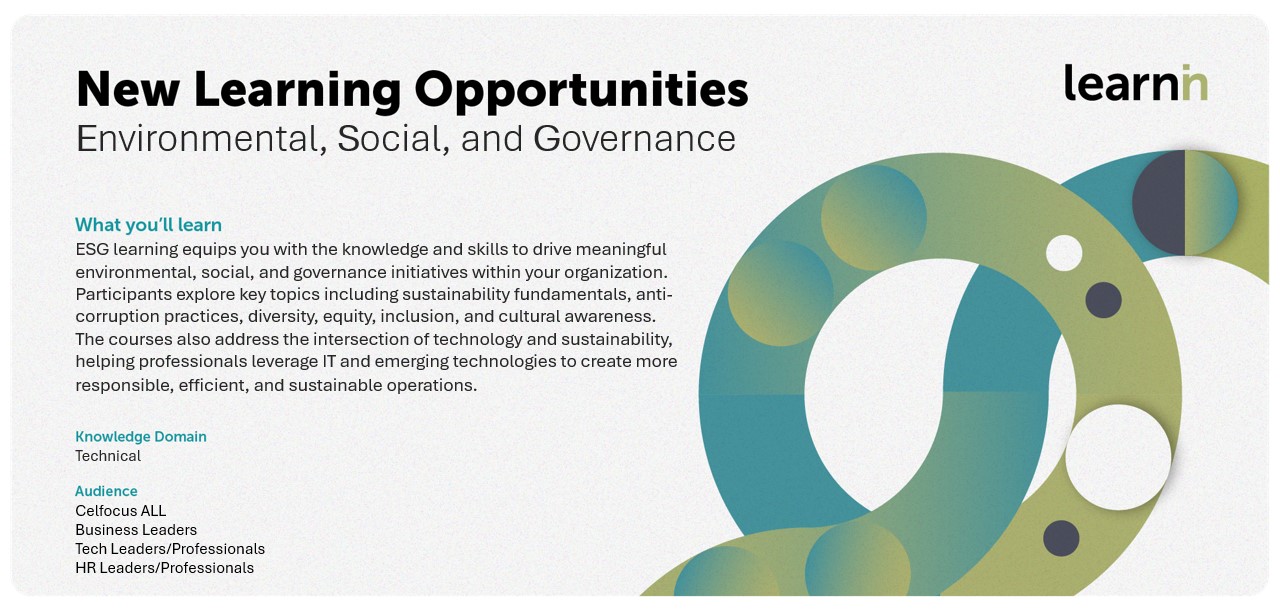
Celfocus training offers a diverse range of ESG courses from sustainability, climate action, ethics, social impact, responsible technology to cultural awareness, anti-corruption, and building truly inclusive workplaces.
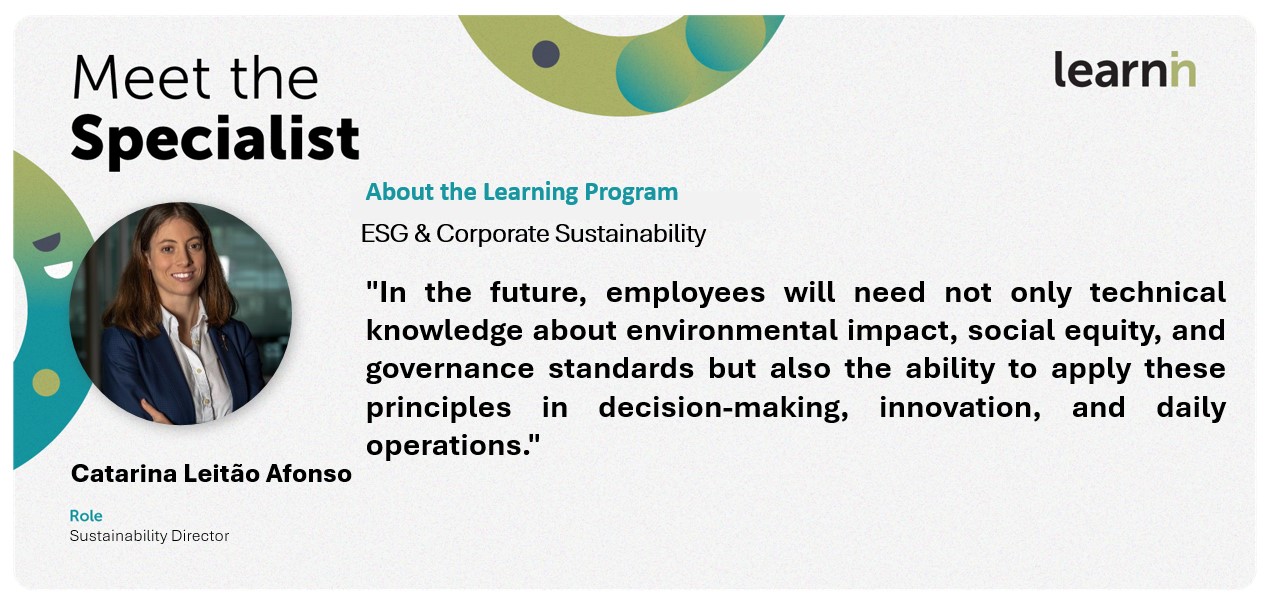
Q. Why do you believe ESG topics are becoming increasingly critical in our industry?
ESG topics are becoming increasingly critical in the technological industry because technology companies play a central role in shaping the future economy and society. From the energy consumption of data centers to the sourcing of raw materials for hardware, environmental responsibility is no longer optional but a key factor in business sustainability. At the same time, social concerns - such as data privacy, inclusion, and fair labor practices in global supply chains - are under growing scrutiny from regulators, investors, and consumers. Technology is deeply embedded in people’s lives, which amplifies the need for responsible governance and transparent practices.
Moreover, ESG performance is now directly tied to business resilience, competitiveness, and access to clients. In a global market where reputation and trust are essential, companies that prioritize ESG are better positioned to innovate responsibly, attract top talent, and build long-term stakeholder value. For the technology sector, where disruptive change is constant, embedding ESG into strategy is not just a moral imperative - it is a strategic necessity.
Q. From your perspective, what are the main challenges or misconceptions professionals face when it comes to ESG, and how can training help overcome them?
One of the main challenges professionals faces with ESG is the misconception that it is only about compliance or philanthropy rather than a strategic driver of business value. Many still view ESG as a “tick-the-box” exercise focused on reporting, instead of a framework that can reduce risks, improve efficiency, and open new opportunities for innovation. Another frequent issue is the lack of clarity and consistency in ESG standards, which creates confusion about what to measure and how to demonstrate impact.
Training can play a crucial role in addressing these gaps by demystifying ESG concepts and linking them to tangible business outcomes. Well-structured programs can help professionals understand evolving regulations, recognize material risks, and develop the skills to integrate ESG into core strategies rather than treating it as an afterthought. Training also fosters a culture of accountability and equips teams with tools to communicate ESG performance effectively to stakeholders. Ultimately, by bridging knowledge gaps, correcting misconceptions, empowering professionals to move beyond compliance and leveraging ESG as a catalyst for long-term resilience and sustainable growth.
Q. How do you see ESG skills evolving in the future, and why is it important for all employees not just sustainability experts to be engaged in this topic?
ESG skills are likely to evolve from being highly specialized into becoming core competencies that cut across all business functions. In the future, employees will need not only technical knowledge about environmental impact, social equity, and governance standards but also the ability to apply these principles in decision-making, innovation, and daily operations. For example, developers will consider circular design, engineers will account for energy efficiency and reuse code, and managers will integrate ethical governance into leadership practices. As digital tools for tracking and reporting ESG metrics become more sophisticated, data literacy and the ability to interpret ESG insights will also become essential skills.
Embedding ESG into the culture ensures that sustainability and responsible governance are not siloed but integrated into how the business operates. Broad engagement fosters accountability, drives innovation, and strengthens trust with stakeholders, from customers to regulators. Ultimately, when ESG becomes part of everyone’s mindset and skillset, companies can move beyond surface-level commitments and create meaningful, measurable, and lasting impact.
As sustainability becomes a business imperative, ESG training ensures that employees understand how their daily actions, from reducing waste to fostering diversity, promoting well-being, and upholding ethical practices contribute to broader organizational goals. This alignment not only cultivates a motivated and engaged workforce but also strengthens long-term business resilience.
At Celfocus, we are committed to developing a comprehensive ESG training program that provides employees with practical tools to integrate sustainability into daily business operations. Ready to act? Explore our ESG training catalogue or contact us at training@celfocus.com to start your ESG journey.
This article is brought to you by Esmeralda Monteiro, Celfocus Training Manager.
In today’s global landscape, environmental, social, and governance (ESG) factors have become key drivers of business sustainability and growth, moving beyond buzzwords to core strategy. Companies worldwide are adopting ESG not just for compliance, but to create lasting stakeholder value, yet effective implementation remains a challenge.
The three ESG pillars (environmental responsibility, social impact, and strong governance) reflect a company’s commitment to creating a positive impact while staying profitable. As regulatory, investor, and consumer expectations rise, companies of all sizes need to integrate ESG into everyday decision-making.
One of the most significant barriers to effective ESG integration remains the lack of knowledge and understanding. The 2025 SDG Report emphasizes that, with only five years left to achieve the 2030 Agenda, empowering stakeholders through targeted ESG capacity building is critical to accelerating progress. Across the globe, young people, communities, civil society, and local leaders continue to champion the Sustainable Development Goals (SDGs). However, persistent conflicts, climate-related challenges, and economic shocks are hindering collective advancement toward the 2030 targets.
The relevance of ESG in business has grown exponentially in recent years. Investors, especially millennials and Gen Z, are actively seeking investments in companies that not only promise returns but also contribute to a sustainable future.
This trend reflects broader societal changes in expectations around corporate responsibility, which, in turn, impacts how businesses approach their operations. From global corporations to small enterprises, there is a pressing need for effective ESG strategies and by extension, comprehensive ESG training programs to bridge the knowledge gap.
The ESG landscape is evolving rapidly, with new regulations, standards, and best practices emerging constantly. Successful training programs incorporate mechanisms for continuous updating and adaptation, ensuring learners stay aligned with changing expectations and opportunities.
ESG training programs are designed to provide practical tools that employees can immediately apply, ensuring that companies remain proactive rather than reactive to regulatory and societal pressures.
Celfocus training offers a diverse range of ESG courses from sustainability, climate action, ethics, social impact, responsible technology to cultural awareness, anti-corruption, and building truly inclusive workplaces.
Q. Why do you believe ESG topics are becoming increasingly critical in our industry?
ESG topics are becoming increasingly critical in the technological industry because technology companies play a central role in shaping the future economy and society. From the energy consumption of data centers to the sourcing of raw materials for hardware, environmental responsibility is no longer optional but a key factor in business sustainability. At the same time, social concerns - such as data privacy, inclusion, and fair labor practices in global supply chains - are under growing scrutiny from regulators, investors, and consumers. Technology is deeply embedded in people’s lives, which amplifies the need for responsible governance and transparent practices.
Moreover, ESG performance is now directly tied to business resilience, competitiveness, and access to clients. In a global market where reputation and trust are essential, companies that prioritize ESG are better positioned to innovate responsibly, attract top talent, and build long-term stakeholder value. For the technology sector, where disruptive change is constant, embedding ESG into strategy is not just a moral imperative - it is a strategic necessity.
Q. From your perspective, what are the main challenges or misconceptions professionals face when it comes to ESG, and how can training help overcome them?
One of the main challenges professionals faces with ESG is the misconception that it is only about compliance or philanthropy rather than a strategic driver of business value. Many still view ESG as a “tick-the-box” exercise focused on reporting, instead of a framework that can reduce risks, improve efficiency, and open new opportunities for innovation. Another frequent issue is the lack of clarity and consistency in ESG standards, which creates confusion about what to measure and how to demonstrate impact.
Training can play a crucial role in addressing these gaps by demystifying ESG concepts and linking them to tangible business outcomes. Well-structured programs can help professionals understand evolving regulations, recognize material risks, and develop the skills to integrate ESG into core strategies rather than treating it as an afterthought. Training also fosters a culture of accountability and equips teams with tools to communicate ESG performance effectively to stakeholders. Ultimately, by bridging knowledge gaps, correcting misconceptions, empowering professionals to move beyond compliance and leveraging ESG as a catalyst for long-term resilience and sustainable growth.
Q. How do you see ESG skills evolving in the future, and why is it important for all employees not just sustainability experts to be engaged in this topic?
ESG skills are likely to evolve from being highly specialized into becoming core competencies that cut across all business functions. In the future, employees will need not only technical knowledge about environmental impact, social equity, and governance standards but also the ability to apply these principles in decision-making, innovation, and daily operations. For example, developers will consider circular design, engineers will account for energy efficiency and reuse code, and managers will integrate ethical governance into leadership practices. As digital tools for tracking and reporting ESG metrics become more sophisticated, data literacy and the ability to interpret ESG insights will also become essential skills.
Embedding ESG into the culture ensures that sustainability and responsible governance are not siloed but integrated into how the business operates. Broad engagement fosters accountability, drives innovation, and strengthens trust with stakeholders, from customers to regulators. Ultimately, when ESG becomes part of everyone’s mindset and skillset, companies can move beyond surface-level commitments and create meaningful, measurable, and lasting impact.
As sustainability becomes a business imperative, ESG training ensures that employees understand how their daily actions, from reducing waste to fostering diversity, promoting well-being, and upholding ethical practices contribute to broader organizational goals. This alignment not only cultivates a motivated and engaged workforce but also strengthens long-term business resilience.
At Celfocus, we are committed to developing a comprehensive ESG training program that provides employees with practical tools to integrate sustainability into daily business operations. Ready to act? Explore our ESG training catalogue or contact us at training@celfocus.com to start your ESG journey.
This article is brought to you by Esmeralda Monteiro, Celfocus Training Manager.
In today’s global landscape, environmental, social, and governance (ESG) factors have become key drivers of business sustainability and growth, moving beyond buzzwords to core strategy. Companies worldwide are adopting ESG not just for compliance, but to create lasting stakeholder value, yet effective implementation remains a challenge.
The three ESG pillars (environmental responsibility, social impact, and strong governance) reflect a company’s commitment to creating a positive impact while staying profitable. As regulatory, investor, and consumer expectations rise, companies of all sizes need to integrate ESG into everyday decision-making.
One of the most significant barriers to effective ESG integration remains the lack of knowledge and understanding. The 2025 SDG Report emphasizes that, with only five years left to achieve the 2030 Agenda, empowering stakeholders through targeted ESG capacity building is critical to accelerating progress. Across the globe, young people, communities, civil society, and local leaders continue to champion the Sustainable Development Goals (SDGs). However, persistent conflicts, climate-related challenges, and economic shocks are hindering collective advancement toward the 2030 targets.
The relevance of ESG in business has grown exponentially in recent years. Investors, especially millennials and Gen Z, are actively seeking investments in companies that not only promise returns but also contribute to a sustainable future.
This trend reflects broader societal changes in expectations around corporate responsibility, which, in turn, impacts how businesses approach their operations. From global corporations to small enterprises, there is a pressing need for effective ESG strategies and by extension, comprehensive ESG training programs to bridge the knowledge gap.
The ESG landscape is evolving rapidly, with new regulations, standards, and best practices emerging constantly. Successful training programs incorporate mechanisms for continuous updating and adaptation, ensuring learners stay aligned with changing expectations and opportunities.
ESG training programs are designed to provide practical tools that employees can immediately apply, ensuring that companies remain proactive rather than reactive to regulatory and societal pressures.
Celfocus training offers a diverse range of ESG courses from sustainability, climate action, ethics, social impact, responsible technology to cultural awareness, anti-corruption, and building truly inclusive workplaces.
Q. Why do you believe ESG topics are becoming increasingly critical in our industry?
ESG topics are becoming increasingly critical in the technological industry because technology companies play a central role in shaping the future economy and society. From the energy consumption of data centers to the sourcing of raw materials for hardware, environmental responsibility is no longer optional but a key factor in business sustainability. At the same time, social concerns - such as data privacy, inclusion, and fair labor practices in global supply chains - are under growing scrutiny from regulators, investors, and consumers. Technology is deeply embedded in people’s lives, which amplifies the need for responsible governance and transparent practices.
Moreover, ESG performance is now directly tied to business resilience, competitiveness, and access to clients. In a global market where reputation and trust are essential, companies that prioritize ESG are better positioned to innovate responsibly, attract top talent, and build long-term stakeholder value. For the technology sector, where disruptive change is constant, embedding ESG into strategy is not just a moral imperative - it is a strategic necessity.
Q. From your perspective, what are the main challenges or misconceptions professionals face when it comes to ESG, and how can training help overcome them?
One of the main challenges professionals faces with ESG is the misconception that it is only about compliance or philanthropy rather than a strategic driver of business value. Many still view ESG as a “tick-the-box” exercise focused on reporting, instead of a framework that can reduce risks, improve efficiency, and open new opportunities for innovation. Another frequent issue is the lack of clarity and consistency in ESG standards, which creates confusion about what to measure and how to demonstrate impact.
Training can play a crucial role in addressing these gaps by demystifying ESG concepts and linking them to tangible business outcomes. Well-structured programs can help professionals understand evolving regulations, recognize material risks, and develop the skills to integrate ESG into core strategies rather than treating it as an afterthought. Training also fosters a culture of accountability and equips teams with tools to communicate ESG performance effectively to stakeholders. Ultimately, by bridging knowledge gaps, correcting misconceptions, empowering professionals to move beyond compliance and leveraging ESG as a catalyst for long-term resilience and sustainable growth.
Q. How do you see ESG skills evolving in the future, and why is it important for all employees not just sustainability experts to be engaged in this topic?
ESG skills are likely to evolve from being highly specialized into becoming core competencies that cut across all business functions. In the future, employees will need not only technical knowledge about environmental impact, social equity, and governance standards but also the ability to apply these principles in decision-making, innovation, and daily operations. For example, developers will consider circular design, engineers will account for energy efficiency and reuse code, and managers will integrate ethical governance into leadership practices. As digital tools for tracking and reporting ESG metrics become more sophisticated, data literacy and the ability to interpret ESG insights will also become essential skills.
Embedding ESG into the culture ensures that sustainability and responsible governance are not siloed but integrated into how the business operates. Broad engagement fosters accountability, drives innovation, and strengthens trust with stakeholders, from customers to regulators. Ultimately, when ESG becomes part of everyone’s mindset and skillset, companies can move beyond surface-level commitments and create meaningful, measurable, and lasting impact.
As sustainability becomes a business imperative, ESG training ensures that employees understand how their daily actions, from reducing waste to fostering diversity, promoting well-being, and upholding ethical practices contribute to broader organizational goals. This alignment not only cultivates a motivated and engaged workforce but also strengthens long-term business resilience.
At Celfocus, we are committed to developing a comprehensive ESG training program that provides employees with practical tools to integrate sustainability into daily business operations. Ready to act? Explore our ESG training catalogue or contact us at training@celfocus.com to start your ESG journey.
This article is brought to you by Esmeralda Monteiro, Celfocus Training Manager.
.png)