To Know
-
The impact of certifications in Strategic Partnerships
Generating Mutual Growth
CALL to Summer
—
Jun 2025

Strategic partnerships in the tech industry are more than mere collaborations. They are long-term alliances designed to generate mutual growth. For businesses aiming to scale, innovate, and lead in their domain, partnering with big players like Amazon Web Services (AWS), Google Cloud Platform (GCP), Microsoft Azure, or Oracle is not just an advantage but a game changer.
Strategic partnerships typically include defined engagement levels or tiers. Each tier unlocks a new level of benefits from joint marketing efforts to dedicated partner managers and customer referrals. But gaining access to these benefits isn’t automatic. Companies must meet specific performance metrics, technical capabilities, and, most critically, certification requirements.
These companies offer structured partner programs tailored to help businesses scale through ecosystem collaboration. Each has built an elaborate framework of support, incentives, and joint business opportunities, but all demand technical excellence backed by certifications.
In the cloud and enterprise technology landscape, certifications serve as proof of competency. They validate how big tech companies assess whether a partner can implement, manage, and support their solutions with expertise. Without certifications, advancing within a partner program or establishing credibility with clients becomes significantly more difficult. Participation in these partner ecosystems enhances brand visibility, builds customer trust, and enables scalable growth opportunities. But without proper certifications, businesses risk staying at the bottom of the ladder, leaving a wealth of benefits untapped.
Cloud providers structure their partnership programs into progressive tiers, each requiring a deeper level of commitment and expertise, both of which are primarily measured by the number and type of certifications held within the organization.
These certifications validate a company's technical expertise and commitment. They influence eligibility for benefits like access to exclusive resources and training, joint marketing initiatives, increased visibility in partner directories and priority in customer referrals.
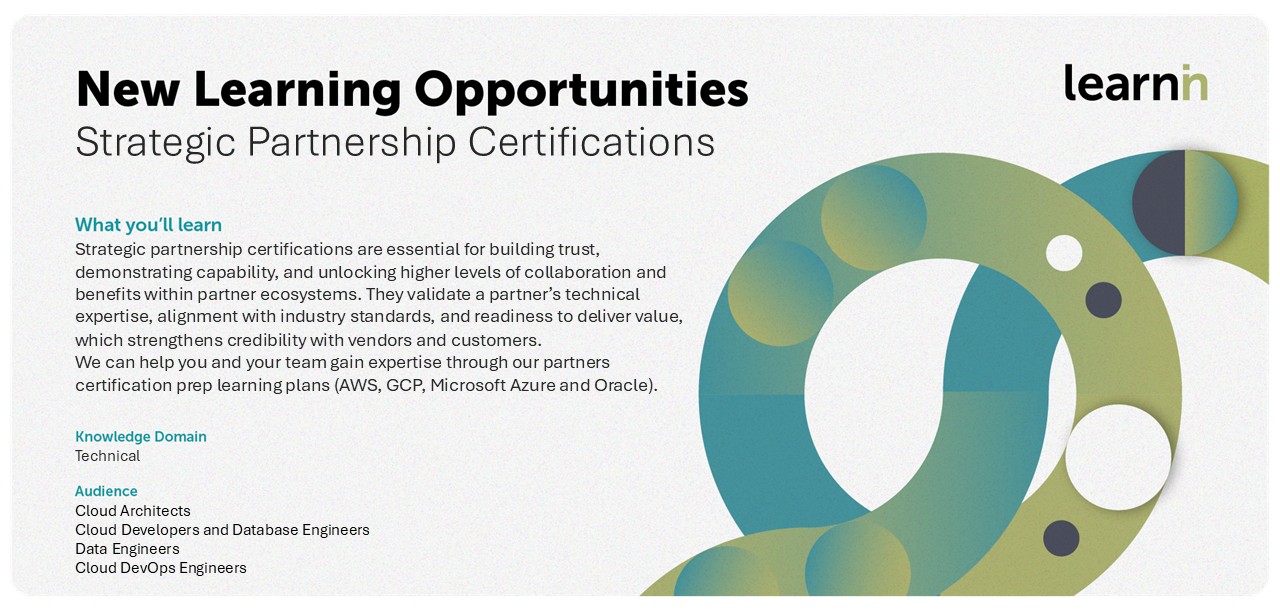
Celfocus Training offers a comprehensive learning program aligned with our partner programs- AWS, GCP, Microsoft Azure, and Oracle. These certification prep learning plans support a variety of roles, including tech staff, project managers, delivery leads, and sales and pre-sales managers. Relevant role-based certifications include those for cloud architects, cloud database engineers, cloud developers, data engineers, DevOps engineers, and cloud security engineers.
Q. How do strategic partnerships contribute to our overall business growth and innovation roadmap?
A. First, we need to understand that true partnership benefits both partners; it is based on this premise that Celfocus created the partnership team. Our strategic partners invest large sums of money to design the best products in the market, Celfocus with 25 years+ of experience, understands how Telco & FSI companies work - from Network to OSS/BSS and Digital Channels, including Data & Analytics as well. This allows Celfocus to implement our partner solutions, addressing the mission critical challenges for our clients and enabling us to be part of an ecosystem where Celfocus and the Partner, together, provide a much better service to our clients and reduce their time market. This approach opens the doors to new clients and, at the same time, expand in our current ones, elevating the market credibility for Celfocus.
For the relationship to grow, it must be nurtured. It is not just focus on the next deal only, but to work collaboratively in building new and innovative solutions that will be ahead of the curve, when compared with others in the market.
Q. What role do certifications play in strategic partnerships?
A. Certifications are a key pillar in the partnerships and impacts Celfocus, at least, in three different ways. The most obvious impact regards our team being trained and certified in the best way on our partner products and services. Which requires time and dedication from our internal teams. The second impact is that having the right level of certifications creates a good business card for our clients (current and future), as it projects confidence in our capabilities. The third one, albeit not least, is that the rules of the game have changed in the last couple of years. Partners now need to choose who they work with, and certifications are definitely part of the selection criteria.
Technology cycles are getting shorter, and suppliers need to be on top of the game. It is vital to nurture the partnership with a regular renewal of the certifications and look out for the certifications on the new technologies coming out regularly. Clients also are aware of those and want a supplier capable to bring innovation along with stability.
Q. How do certifications impact the advancement through the tiers of a partner program?
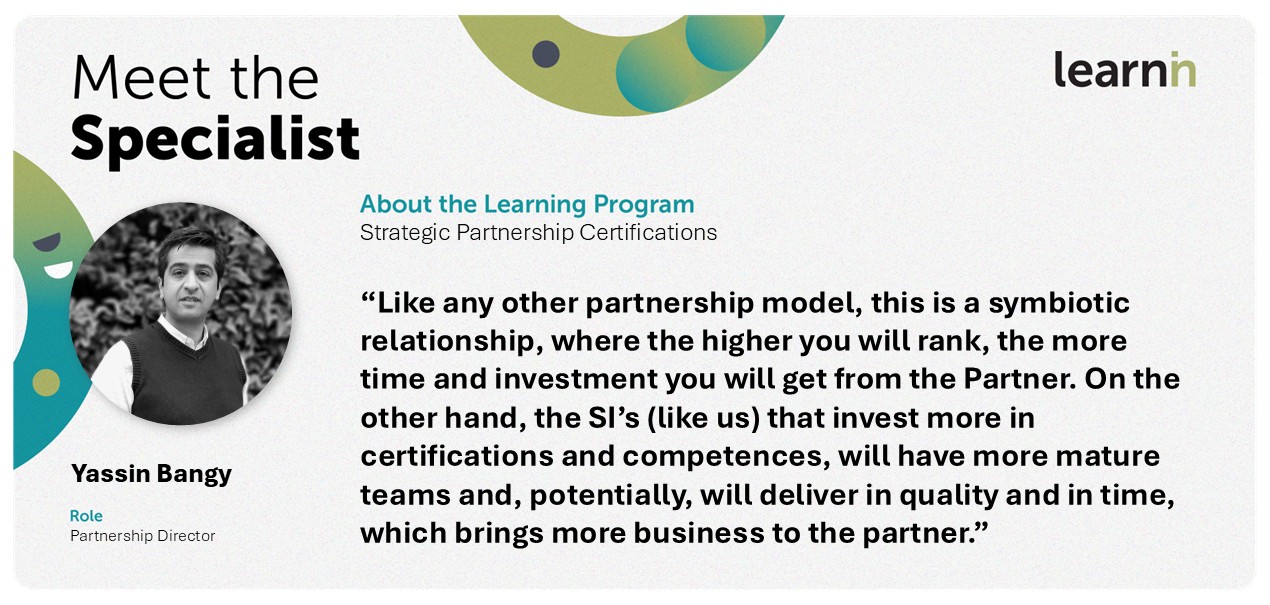
A. Like any other partnership model, this is a symbiotic relationship, where the higher you will rank, the more time and investment you will get from the Partner. On the other hand, the SI’s (like us) that invest more in certifications and competences, will have more mature teams and, potentially, will deliver in quality and in time, which brings more business to the partner. And so on and so forth… This also applies to Marketing investment and Funding for PoC’s that our Partners will provide to Celfocus. By acknowledging this model, Celfocus has decided to invest and ensure higher levels of partnership tiers. However, ensuring higher tiers of partnership is not necessarily an easy task. The balance between ensuring the right staff in the projects and, at the same time, having the same people doing certifications is a big challenge for our BL’s, which we understand and respect.
One year after the creation of the Partnership team, I believe that the results speak for themselves. We never had before such a higher engagement with our partners as the number of opportunities and consequent deals have largely increased. This is a strategy that we believe in and will continue to invest on.
___________________________
Certifications build trust, prove capability, and unlock higher-tier benefits in partner ecosystems. They demonstrate technical expertise and readiness to deliver value, boosting credibility with vendors and customers.
Certifications often serve as a key criterion for advancing through partnership tiers, influencing access to resources, joint opportunities, and strategic support. As partner programs evolve, maintaining up-to-date certifications ensures continued relevance, competitiveness, and alignment with business goals.
Celfocus will keep promoting this learning program positioning the organization to harness the full potential of cloud technologies and drive business growth. To learn more about the strategic partnership certification offer, please explore our catalogue here or contact us.
This article is brought to you by Esmeralda Monteiro, Celfocus Technical Training Manager.
Strategic partnerships in the tech industry are more than mere collaborations. They are long-term alliances designed to generate mutual growth. For businesses aiming to scale, innovate, and lead in their domain, partnering with big players like Amazon Web Services (AWS), Google Cloud Platform (GCP), Microsoft Azure, or Oracle is not just an advantage but a game changer.
Strategic partnerships typically include defined engagement levels or tiers. Each tier unlocks a new level of benefits from joint marketing efforts to dedicated partner managers and customer referrals. But gaining access to these benefits isn’t automatic. Companies must meet specific performance metrics, technical capabilities, and, most critically, certification requirements.
These companies offer structured partner programs tailored to help businesses scale through ecosystem collaboration. Each has built an elaborate framework of support, incentives, and joint business opportunities, but all demand technical excellence backed by certifications.
In the cloud and enterprise technology landscape, certifications serve as proof of competency. They validate how big tech companies assess whether a partner can implement, manage, and support their solutions with expertise. Without certifications, advancing within a partner program or establishing credibility with clients becomes significantly more difficult. Participation in these partner ecosystems enhances brand visibility, builds customer trust, and enables scalable growth opportunities. But without proper certifications, businesses risk staying at the bottom of the ladder, leaving a wealth of benefits untapped.
Cloud providers structure their partnership programs into progressive tiers, each requiring a deeper level of commitment and expertise, both of which are primarily measured by the number and type of certifications held within the organization.
These certifications validate a company's technical expertise and commitment. They influence eligibility for benefits like access to exclusive resources and training, joint marketing initiatives, increased visibility in partner directories and priority in customer referrals.
Celfocus Training offers a comprehensive learning program aligned with our partner programs- AWS, GCP, Microsoft Azure, and Oracle. These certification prep learning plans support a variety of roles, including tech staff, project managers, delivery leads, and sales and pre-sales managers. Relevant role-based certifications include those for cloud architects, cloud database engineers, cloud developers, data engineers, DevOps engineers, and cloud security engineers.
Q. How do strategic partnerships contribute to our overall business growth and innovation roadmap?
A. First, we need to understand that true partnership benefits both partners; it is based on this premise that Celfocus created the partnership team. Our strategic partners invest large sums of money to design the best products in the market, Celfocus with 25 years+ of experience, understands how Telco & FSI companies work - from Network to OSS/BSS and Digital Channels, including Data & Analytics as well. This allows Celfocus to implement our partner solutions, addressing the mission critical challenges for our clients and enabling us to be part of an ecosystem where Celfocus and the Partner, together, provide a much better service to our clients and reduce their time market. This approach opens the doors to new clients and, at the same time, expand in our current ones, elevating the market credibility for Celfocus.
For the relationship to grow, it must be nurtured. It is not just focus on the next deal only, but to work collaboratively in building new and innovative solutions that will be ahead of the curve, when compared with others in the market.
Q. What role do certifications play in strategic partnerships?
A. Certifications are a key pillar in the partnerships and impacts Celfocus, at least, in three different ways. The most obvious impact regards our team being trained and certified in the best way on our partner products and services. Which requires time and dedication from our internal teams. The second impact is that having the right level of certifications creates a good business card for our clients (current and future), as it projects confidence in our capabilities. The third one, albeit not least, is that the rules of the game have changed in the last couple of years. Partners now need to choose who they work with, and certifications are definitely part of the selection criteria.
Technology cycles are getting shorter, and suppliers need to be on top of the game. It is vital to nurture the partnership with a regular renewal of the certifications and look out for the certifications on the new technologies coming out regularly. Clients also are aware of those and want a supplier capable to bring innovation along with stability.
Q. How do certifications impact the advancement through the tiers of a partner program?
A. Like any other partnership model, this is a symbiotic relationship, where the higher you will rank, the more time and investment you will get from the Partner. On the other hand, the SI’s (like us) that invest more in certifications and competences, will have more mature teams and, potentially, will deliver in quality and in time, which brings more business to the partner. And so on and so forth… This also applies to Marketing investment and Funding for PoC’s that our Partners will provide to Celfocus. By acknowledging this model, Celfocus has decided to invest and ensure higher levels of partnership tiers. However, ensuring higher tiers of partnership is not necessarily an easy task. The balance between ensuring the right staff in the projects and, at the same time, having the same people doing certifications is a big challenge for our BL’s, which we understand and respect.
One year after the creation of the Partnership team, I believe that the results speak for themselves. We never had before such a higher engagement with our partners as the number of opportunities and consequent deals have largely increased. This is a strategy that we believe in and will continue to invest on.
___________________________
Certifications build trust, prove capability, and unlock higher-tier benefits in partner ecosystems. They demonstrate technical expertise and readiness to deliver value, boosting credibility with vendors and customers.
Certifications often serve as a key criterion for advancing through partnership tiers, influencing access to resources, joint opportunities, and strategic support. As partner programs evolve, maintaining up-to-date certifications ensures continued relevance, competitiveness, and alignment with business goals.
Celfocus will keep promoting this learning program positioning the organization to harness the full potential of cloud technologies and drive business growth. To learn more about the strategic partnership certification offer, please explore our catalogue here or contact us.
This article is brought to you by Esmeralda Monteiro, Celfocus Technical Training Manager.
Strategic partnerships in the tech industry are more than mere collaborations. They are long-term alliances designed to generate mutual growth. For businesses aiming to scale, innovate, and lead in their domain, partnering with big players like Amazon Web Services (AWS), Google Cloud Platform (GCP), Microsoft Azure, or Oracle is not just an advantage but a game changer.
Strategic partnerships typically include defined engagement levels or tiers. Each tier unlocks a new level of benefits from joint marketing efforts to dedicated partner managers and customer referrals. But gaining access to these benefits isn’t automatic. Companies must meet specific performance metrics, technical capabilities, and, most critically, certification requirements.
These companies offer structured partner programs tailored to help businesses scale through ecosystem collaboration. Each has built an elaborate framework of support, incentives, and joint business opportunities, but all demand technical excellence backed by certifications.
In the cloud and enterprise technology landscape, certifications serve as proof of competency. They validate how big tech companies assess whether a partner can implement, manage, and support their solutions with expertise. Without certifications, advancing within a partner program or establishing credibility with clients becomes significantly more difficult. Participation in these partner ecosystems enhances brand visibility, builds customer trust, and enables scalable growth opportunities. But without proper certifications, businesses risk staying at the bottom of the ladder, leaving a wealth of benefits untapped.
Cloud providers structure their partnership programs into progressive tiers, each requiring a deeper level of commitment and expertise, both of which are primarily measured by the number and type of certifications held within the organization.
These certifications validate a company's technical expertise and commitment. They influence eligibility for benefits like access to exclusive resources and training, joint marketing initiatives, increased visibility in partner directories and priority in customer referrals.
Celfocus Training offers a comprehensive learning program aligned with our partner programs- AWS, GCP, Microsoft Azure, and Oracle. These certification prep learning plans support a variety of roles, including tech staff, project managers, delivery leads, and sales and pre-sales managers. Relevant role-based certifications include those for cloud architects, cloud database engineers, cloud developers, data engineers, DevOps engineers, and cloud security engineers.
Q. How do strategic partnerships contribute to our overall business growth and innovation roadmap?
A. First, we need to understand that true partnership benefits both partners; it is based on this premise that Celfocus created the partnership team. Our strategic partners invest large sums of money to design the best products in the market, Celfocus with 25 years+ of experience, understands how Telco & FSI companies work - from Network to OSS/BSS and Digital Channels, including Data & Analytics as well. This allows Celfocus to implement our partner solutions, addressing the mission critical challenges for our clients and enabling us to be part of an ecosystem where Celfocus and the Partner, together, provide a much better service to our clients and reduce their time market. This approach opens the doors to new clients and, at the same time, expand in our current ones, elevating the market credibility for Celfocus.
For the relationship to grow, it must be nurtured. It is not just focus on the next deal only, but to work collaboratively in building new and innovative solutions that will be ahead of the curve, when compared with others in the market.
Q. What role do certifications play in strategic partnerships?
A. Certifications are a key pillar in the partnerships and impacts Celfocus, at least, in three different ways. The most obvious impact regards our team being trained and certified in the best way on our partner products and services. Which requires time and dedication from our internal teams. The second impact is that having the right level of certifications creates a good business card for our clients (current and future), as it projects confidence in our capabilities. The third one, albeit not least, is that the rules of the game have changed in the last couple of years. Partners now need to choose who they work with, and certifications are definitely part of the selection criteria.
Technology cycles are getting shorter, and suppliers need to be on top of the game. It is vital to nurture the partnership with a regular renewal of the certifications and look out for the certifications on the new technologies coming out regularly. Clients also are aware of those and want a supplier capable to bring innovation along with stability.
Q. How do certifications impact the advancement through the tiers of a partner program?
A. Like any other partnership model, this is a symbiotic relationship, where the higher you will rank, the more time and investment you will get from the Partner. On the other hand, the SI’s (like us) that invest more in certifications and competences, will have more mature teams and, potentially, will deliver in quality and in time, which brings more business to the partner. And so on and so forth… This also applies to Marketing investment and Funding for PoC’s that our Partners will provide to Celfocus. By acknowledging this model, Celfocus has decided to invest and ensure higher levels of partnership tiers. However, ensuring higher tiers of partnership is not necessarily an easy task. The balance between ensuring the right staff in the projects and, at the same time, having the same people doing certifications is a big challenge for our BL’s, which we understand and respect.
One year after the creation of the Partnership team, I believe that the results speak for themselves. We never had before such a higher engagement with our partners as the number of opportunities and consequent deals have largely increased. This is a strategy that we believe in and will continue to invest on.
___________________________
Certifications build trust, prove capability, and unlock higher-tier benefits in partner ecosystems. They demonstrate technical expertise and readiness to deliver value, boosting credibility with vendors and customers.
Certifications often serve as a key criterion for advancing through partnership tiers, influencing access to resources, joint opportunities, and strategic support. As partner programs evolve, maintaining up-to-date certifications ensures continued relevance, competitiveness, and alignment with business goals.
Celfocus will keep promoting this learning program positioning the organization to harness the full potential of cloud technologies and drive business growth. To learn more about the strategic partnership certification offer, please explore our catalogue here or contact us.
This article is brought to you by Esmeralda Monteiro, Celfocus Technical Training Manager.
.png)