To You
-
FLASH INTERVIEW
Rolling out
How AI is becoming part of the team
CALL to Start
Apr 2026
To You
-
FLASH INTERVIEW
Rolling out
How AI is becoming part of the team
CALL to Start
Apr 2026
EDITION EDITORIAL & OVERVIEW
Rolling out
#
68
CALL to Start
-
Apr 2026

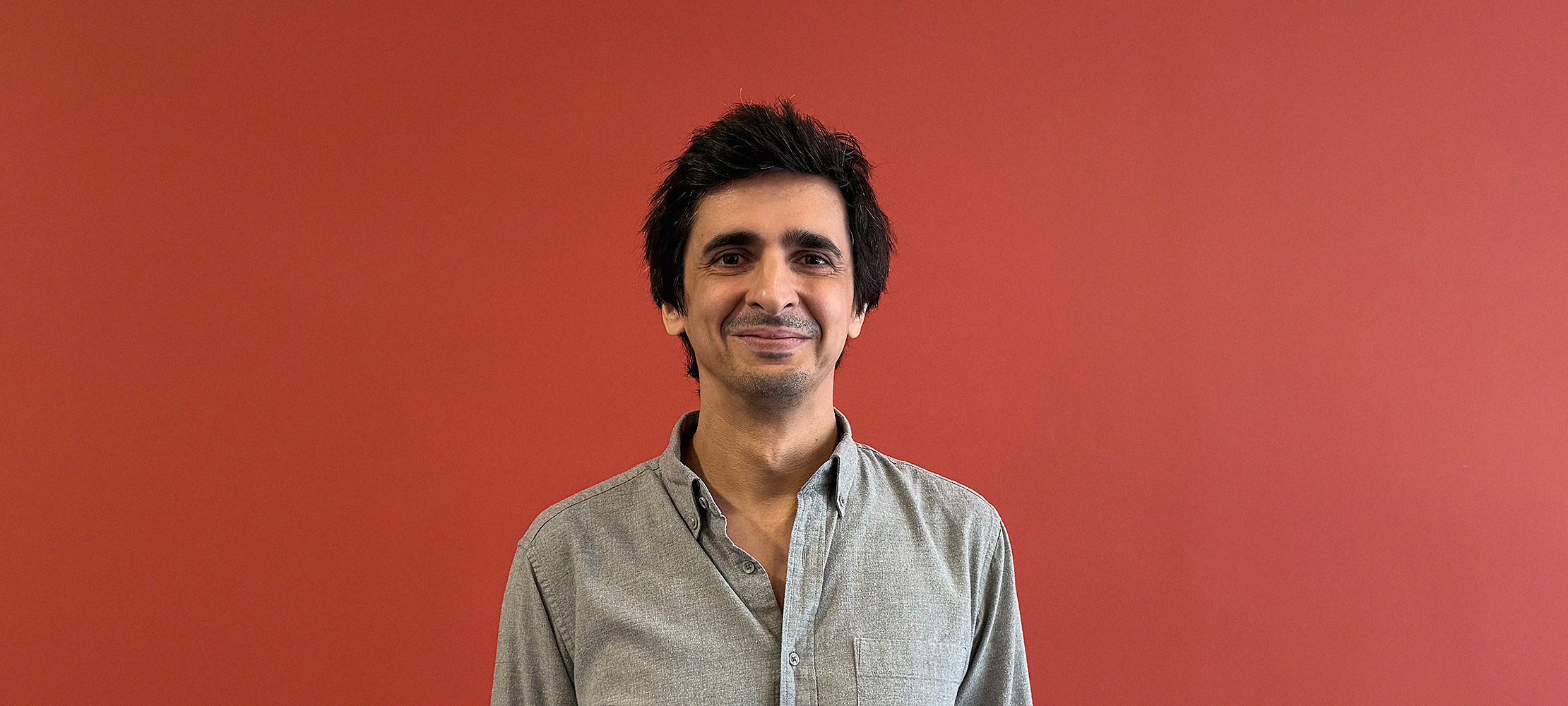
Meet Miguel Graça

(video)

If you had to introduce Spark Project to someone in an elevator, how would you explain it before the doors open?

Spark is a project that is helping our delivery lifecycle leverage AI – the 2026 version, not just a chatbot. We're embedding AI agents directly into our delivery teams — not as a tool you open on the side, but as a working member of the team. The goal is simple: our engineers spend more time on the hard problems, and agents handle the execution. We've already seen what that looks like in practice — one pilot cut sprint delivery by 10x the initial defined effort. That's not a typo.

What is the most exciting thing about starting a project in today’s AI landscape?

The gap between idea and working prototype has collapsed. A well-scoped problem can go from spec to running code in hours. That changes how you think about risk — you can validate much earlier, fail cheaper, and iterate faster. The teams that figure out how to structure that process well are going to run circles around everyone else.

How does Spark take “Next- Gen Intelligence” from strategy slides into real life?

We stopped talking about AI in the abstract and started asking: which specific task in this specific project can an agent do right now? We are out of the “laboratory” and working with real projects, rolling out methodologies, trying new things, and learning together while getting better.

An example is SDD (Spec-Driven Development), which we have been exploring for us to have hybrid teams. You write a precise spec, a human reviews it, an agent executes it. It's not magic, it's a method. The “pptware” becomes real when a PM on a client project uses it for the first time and doesn't want to go back.

All in all, change is happening and happening fast. Spark is the enabler for change at Celfocus but all of us are needed for it to be successful.
No items found.

Imagine that Spark is a success. A year from now, how will a normal workday be like in our teams?

You start the day and your agent has already checked your tasks, reviewed the overnight build, flagged the two issues worth your attention, and drafted the client update. You spend your morning on the things that actually need a human — a tricky architectural decision, a difficult client conversation, a creative problem. The afternoon is a code review where half the code was written by an agent you instructed. You leave on time. Work stays at work and you develop a second brain the let's your first brain rest and generate the truly groundbreaking ideas. That's the vision — not fewer people, but people working on more and better problems.

With AI joining our workflows, what’s one human superpower you think we should never lose?

Judgement. AI is extraordinarily good at execution and increasingly good at synthesis. But knowing which problem is worth solving — and why it matters to this client, at this moment — that still requires a human who understands context, stakes, and relationships. The teams that will get the most out of AI are the ones who sharpen that skill, not outsource it.

What’s something you’ve learned so far that you wish every team knew before starting their own AI journey?

Start with the discomfort, not the demo. It's easy to build a prototype that impresses in a meeting. It's hard to change how a team really works day-to-day. The real challenge isn't technical — it's getting people to trust a new way of working enough to try it for real. The teams we’ve seen succeed are the ones who had leadership that said "we're going to do this properly" and meant it.

Check out Miguel's cultural recommendations and get inspired here!

No items found.

Meet Miguel Graça

(video)

No items found.

Imagine that Spark is a success. A year from now, how will a normal workday be like in our teams?

You start the day and your agent has already checked your tasks, reviewed the overnight build, flagged the two issues worth your attention, and drafted the client update. You spend your morning on the things that actually need a human — a tricky architectural decision, a difficult client conversation, a creative problem. The afternoon is a code review where half the code was written by an agent you instructed. You leave on time. Work stays at work and you develop a second brain the let's your first brain rest and generate the truly groundbreaking ideas. That's the vision — not fewer people, but people working on more and better problems.

No items found.

Meet Miguel Graça

(video)

If you had to introduce Spark Project to someone in an elevator, how would you explain it before the doors open?

Spark is a project that is helping our delivery lifecycle leverage AI – the 2026 version, not just a chatbot. We're embedding AI agents directly into our delivery teams — not as a tool you open on the side, but as a working member of the team. The goal is simple: our engineers spend more time on the hard problems, and agents handle the execution. We've already seen what that looks like in practice — one pilot cut sprint delivery by 10x the initial defined effort. That's not a typo.

What is the most exciting thing about starting a project in today’s AI landscape?

The gap between idea and working prototype has collapsed. A well-scoped problem can go from spec to running code in hours. That changes how you think about risk — you can validate much earlier, fail cheaper, and iterate faster. The teams that figure out how to structure that process well are going to run circles around everyone else.

How does Spark take “Next- Gen Intelligence” from strategy slides into real life?

We stopped talking about AI in the abstract and started asking: which specific task in this specific project can an agent do right now? We are out of the “laboratory” and working with real projects, rolling out methodologies, trying new things, and learning together while getting better.

An example is SDD (Spec-Driven Development), which we have been exploring for us to have hybrid teams. You write a precise spec, a human reviews it, an agent executes it. It's not magic, it's a method. The “pptware” becomes real when a PM on a client project uses it for the first time and doesn't want to go back.

All in all, change is happening and happening fast. Spark is the enabler for change at Celfocus but all of us are needed for it to be successful.

No items found.

Imagine that Spark is a success. A year from now, how will a normal workday be like in our teams?

You start the day and your agent has already checked your tasks, reviewed the overnight build, flagged the two issues worth your attention, and drafted the client update. You spend your morning on the things that actually need a human — a tricky architectural decision, a difficult client conversation, a creative problem. The afternoon is a code review where half the code was written by an agent you instructed. You leave on time. Work stays at work and you develop a second brain the let's your first brain rest and generate the truly groundbreaking ideas. That's the vision — not fewer people, but people working on more and better problems.

With AI joining our workflows, what’s one human superpower you think we should never lose?

Judgement. AI is extraordinarily good at execution and increasingly good at synthesis. But knowing which problem is worth solving — and why it matters to this client, at this moment — that still requires a human who understands context, stakes, and relationships. The teams that will get the most out of AI are the ones who sharpen that skill, not outsource it.

What’s something you’ve learned so far that you wish every team knew before starting their own AI journey?

Start with the discomfort, not the demo. It's easy to build a prototype that impresses in a meeting. It's hard to change how a team really works day-to-day. The real challenge isn't technical — it's getting people to trust a new way of working enough to try it for real. The teams we’ve seen succeed are the ones who had leadership that said "we're going to do this properly" and meant it.

Check out Miguel's cultural recommendations and get inspired here!

No items found.
Go Back
Let Us Know Your Thoughts About Our Newsletter!
Start by
Saying Hi!
© 2026 Celfocus. All rights reserved.
Let Us Know Your Thoughts About Our Newsletter!
Start by
Saying Hi!
© 2026 Celfocus. All rights reserved.
98
60
ai-driven-cloud-platforms
50
biased-by-design
40
operating-in-uncertainty
99
breaking-ground
55
human-side
43
hop-on-board
95
to-be-defined
80
step-inside
45
kubernetes-vs-serverless
55
on-the-radar
90
strategic-shift
98
rolling-out-
100
new-chapter
96
heres-to-you